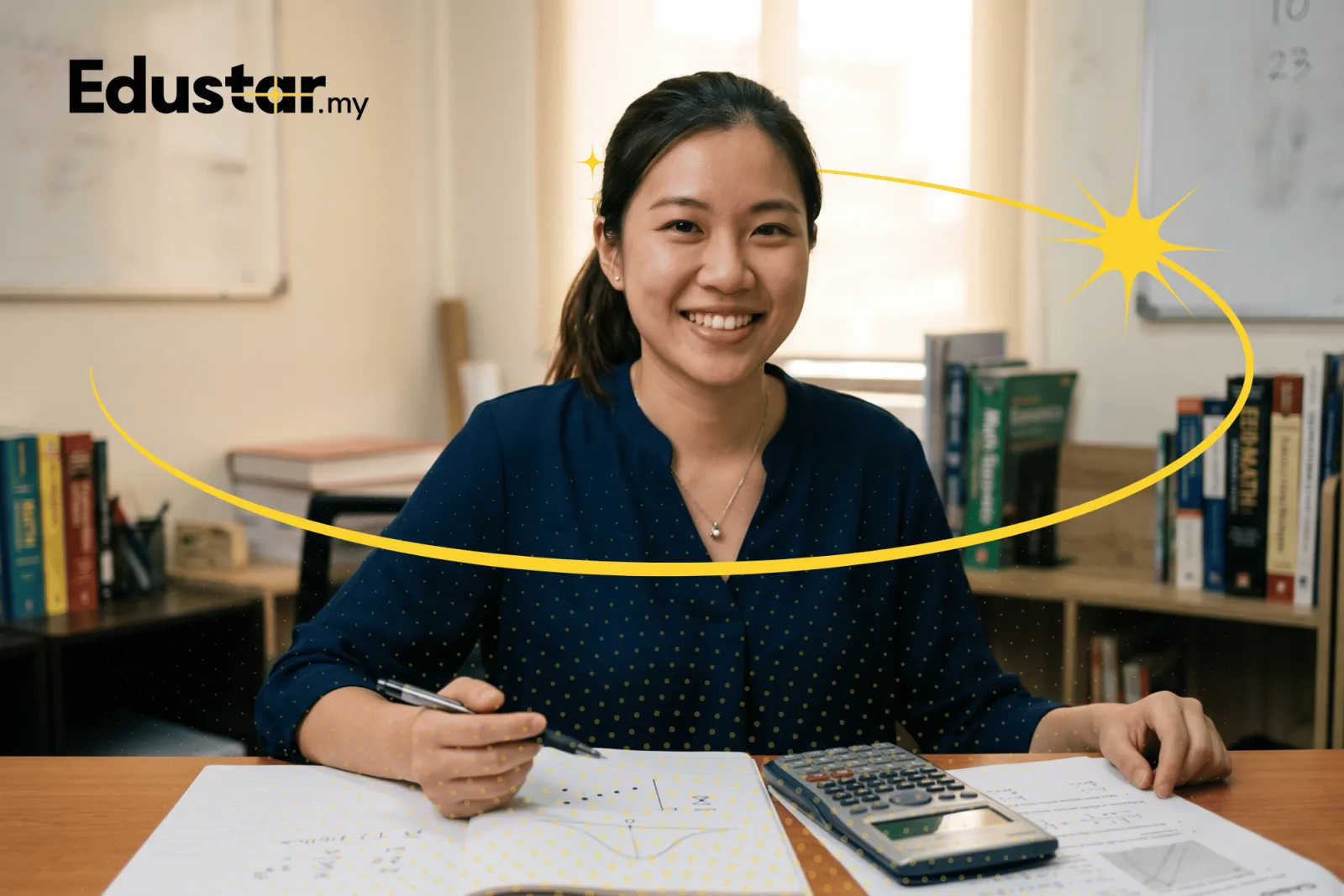
SPSS Tuition in Malaysia
SPSS tuition in Malaysia is 1-to-1 coaching on IBM SPSS Statistics 29 / 30 (formerly PASW) and IBM SPSS AMOS for thesis-grade statistical analysis. Descriptive statistics, reliability (Cronbach α ≥ 0.70), parametric and non-parametric tests, regression, factor analysis and covariance-based SEM. MOHE-licensed free at UM, UKM, USM, UPM, UTM, UiTM and IIUM for enrolled students.
What is SPSS Tuition (IBM SPSS Statistics 29 / 30 + AMOS)?
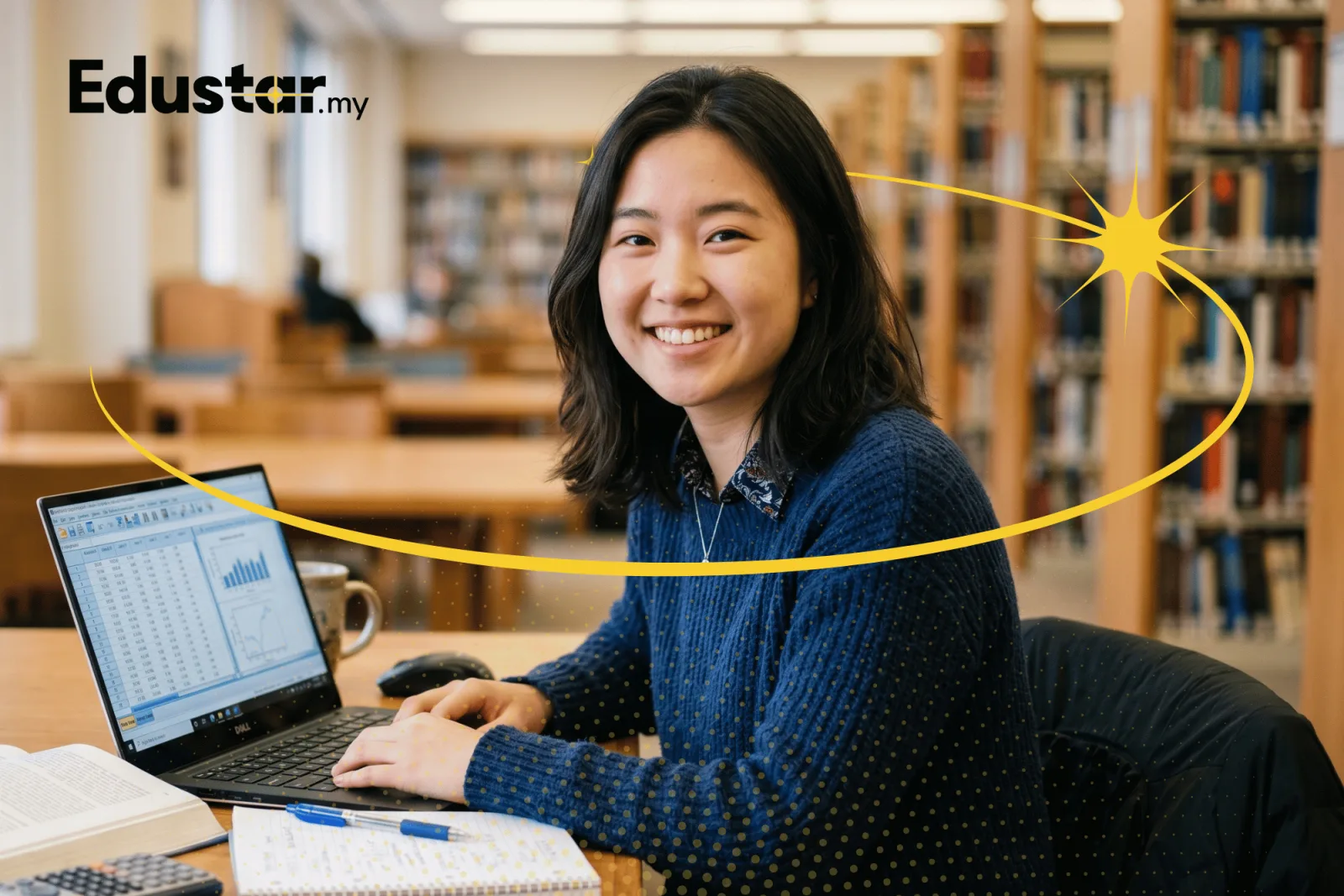
SPSS tuition at Edustar is structured 1-to-1 coaching on IBM SPSS Statistics 29 / 30. The statistical-analysis package originally developed by SPSS Inc., briefly rebranded PASW (Predictive Analytics SoftWare), and acquired by IBM in 2009. The coaching covers the full thesis workflow used at Malaysian IPTAs: data entry and variable-view setup (nominal / ordinal / scale measurement levels), descriptive statistics, reliability testing (Cronbach's alpha α ≥ 0.70 per Nunnally / Hair et al.), normality and assumption checks (Shapiro-Wilk, Levene), parametric inferential tests (independent and paired t-test, one-way and two-way ANOVA, Pearson correlation, simple and multiple linear regression, chi-square test of independence), the matching non-parametric alternatives (Mann-Whitney U, Wilcoxon signed-rank, Kruskal-Wallis H, Spearman ρ), exploratory and confirmatory factor analysis, and APA-style output formatting. For postgraduate candidates running covariance-based structural equation modelling, the coaching extends to IBM SPSS AMOS (Analysis of MOment Structures) with the Hu & Bentler 1999 / Hair et al. 2018 fit-index thresholds (CFI ≥ 0.90, TLI ≥ 0.90, RMSEA ≤ 0.08, SRMR ≤ 0.08). Business-research candidates using variance-based PLS-SEM in SmartPLS 4 are also supported, with cross-mapping to the Hair, Hult, Ringle & Sarstedt (2022) PLS-SEM Primer 3rd Edition standard.
- 01IBM SPSS Statistics 29 / 30. Formerly PASW Statistics (SPSS Inc. → IBM acquisition 2009), node-locked institutional licence at IPTA
- 02MOHE consortium licence: IBM SPSS Statistics + AMOS available free to enrolled students at UM, UKM, USM, UPM, UTM, UiTM, IIUM; campus-network download or AnyDesk / remote-desktop access via institutional VPN
- 03Reliability testing: Cronbach's alpha α ≥ 0.70 threshold (Nunnally 1978; Hair et al. 2018) before any inferential test on Likert-scale survey instruments
- 04Parametric vs non-parametric test selection rule. Assumptions checked via Shapiro-Wilk p > 0.05 (normality) and Levene p > 0.05 (homogeneity of variance); fall back to Mann-Whitney U, Wilcoxon signed-rank, Kruskal-Wallis H, or Spearman ρ when violated
- 05Factor analysis assumption checks: KMO ≥ 0.60, Bartlett's test of sphericity p < 0.05, eigenvalue > 1.0 (Kaiser criterion), factor loading ≥ 0.50 (Hair et al. 2018)
- 06IBM SPSS AMOS for covariance-based SEM. Fit indices CFI ≥ 0.90, TLI ≥ 0.90, RMSEA ≤ 0.08, SRMR ≤ 0.08 (Hu & Bentler 1999; Hair et al. 2018)
- 07SmartPLS 4 for variance-based PLS-SEM: Hair, Hult, Ringle & Sarstedt (2022) PLS-SEM Primer 3rd Edition standard, the dominant business-school SEM tool for smaller samples and formative constructs
What SPSS tuition with Edustar covers
Honest scope. Structured 1-to-1 SPSS coaching for FYP, Master, PhD and working-researcher candidates; no fabricated CGPA or pass-rate claims.
Undergrad – PhD
research levels supported
SPSS 29 / 30 + AMOS
IBM tools coached hands-on
8–12 weeks
per-module SPSS coaching cycle
Nationwide
in-person Klang Valley, Penang, JB + online elsewhere
What we cover: three SPSS modules, end-to-end thesis workflow
Mapped to IBM SPSS Statistics 29 / 30, IBM SPSS AMOS, and the Hair et al. 'Multivariate Data Analysis' 8th Ed / Field 'Discovering Statistics Using SPSS' 5th Ed textbook standards used across Malaysian universities.
Foundations. Interface, data entry, descriptive statistics
Get fluent with the SPSS environment before touching any inferential test. Most postgrad time is lost here on misconfigured variable types, not on the test itself.
IBM SPSS Statistics 29 / 30 interface (Data View, Variable View, Output Viewer .spv); installation routes: MOHE consortium licence download via IPTA library portal (UM, UKM, USM, UPM, UTM, UiTM, IIUM) or AnyDesk / remote-desktop access via institutional VPN; data file formats (.sav native, .csv / .xlsx import); Variable View setup: variable name, label, measurement level (nominal / ordinal / scale), value labels for categorical coding, missing-value handling; coding Likert-scale survey instruments correctly (1 = Strongly Disagree → 5 = Strongly Agree); descriptive statistics (Analyze → Descriptive Statistics → Frequencies / Descriptives / Explore): mean, median, mode, standard deviation, skewness, kurtosis; cross-tabulation; basic chart-building (histogram, bar, box-plot) via Chart Builder; Data → Split File, Select Cases and Recode Into Different Variables for sub-group analysis; exporting Output Viewer to Word / PDF in APA-table format.
Inferential. T-test, ANOVA, regression, chi-square
The standard inferential-statistics toolkit Malaysian undergraduate FYP and Master thesis chapters actually use, with the parametric / non-parametric decision rule built in.
Reliability testing first: Cronbach's alpha α ≥ 0.70 threshold via Analyze → Scale → Reliability Analysis; assumption checks: Shapiro-Wilk and Kolmogorov-Smirnov normality (Analyze → Descriptive Statistics → Explore), Levene's test for homogeneity of variance; parametric tests: independent-samples t-test, paired-samples t-test, one-way ANOVA + Tukey / Bonferroni post-hoc, two-way ANOVA + interaction effect, Pearson correlation, simple linear regression, multiple linear regression (assumption checks: linearity, homoscedasticity, multicollinearity VIF < 10, Durbin-Watson 1.5–2.5); non-parametric alternatives when assumptions fail: Mann-Whitney U (vs independent t-test), Wilcoxon signed-rank (vs paired t-test), Kruskal-Wallis H (vs one-way ANOVA), Spearman ρ (vs Pearson r); chi-square test of independence and goodness-of-fit for categorical data; effect-size reporting (Cohen's d, η², φ); APA-style table formatting of every output.
Advanced. Factor analysis, SEM via AMOS, report writing
Postgraduate-grade SPSS. Exploratory factor analysis through to covariance-based SEM in IBM SPSS AMOS, with cross-mapping to SmartPLS 4 for variance-based PLS-SEM business research.
Exploratory Factor Analysis (EFA): KMO ≥ 0.60, Bartlett's test of sphericity p < 0.05, Principal Component vs Principal Axis extraction, Varimax / Promax rotation, eigenvalue > 1.0 (Kaiser criterion), scree plot interpretation, factor loading ≥ 0.50 (Hair et al. 2018); Confirmatory Factor Analysis (CFA) in IBM SPSS AMOS: measurement model specification, standardised loadings ≥ 0.50, AVE ≥ 0.50, composite reliability ≥ 0.70; covariance-based Structural Equation Modelling (CB-SEM) in AMOS: path diagram drawing, model identification, maximum-likelihood estimation, fit-index reporting (CFI ≥ 0.90, TLI ≥ 0.90, RMSEA ≤ 0.08, SRMR ≤ 0.08 per Hu & Bentler 1999 / Hair et al. 2018), modification indices for model re-specification; common-method bias: Harman's single-factor test, marker-variable approach; mediation analysis via PROCESS macro v4 (Hayes) for SPSS; cross-mapping for variance-based PLS-SEM in SmartPLS 4 (Hair, Hult, Ringle & Sarstedt 2022 PLS-SEM Primer 3rd Ed); thesis-chapter write-up: Chapter 3 (Methodology) justification of test selection, Chapter 4 (Results) APA-style table & figure formatting, Chapter 5 (Discussion) linking results back to research questions; pre-submission Turnitin similarity rescue (< 20% undergrad / < 15% postgrad).
Who SPSS tuition in Malaysia is for
We fit both the tutor and the depth of coaching to where the candidate actually stands, from a Year 3 FYP student meeting SPSS for the first time to a PhD researcher re-specifying an SEM model.
Undergraduate FYP (Projek Tahun Akhir) candidates
Final-year UM, UKM, USM, UPM, UTM, UiTM or IPTS undergrads in Education, Business, Psychology, Sociology, Public Health, Communication or Nursing. First sustained contact with IBM SPSS Statistics, typically on a Likert-scale survey-based FYP. Tools are unfamiliar, supervisor feedback cycle is slow, the deadline is fixed.
- Variable View setup wrong (measurement level set to Scale when it should be Nominal) breaks every downstream test
- Supervisor said 'do an ANOVA'. Candidate does not know what assumptions to check
- SPSS output runs but the APA-style write-up of the result is a mystery
- Reliability (Cronbach α) test was skipped. Pemeriksa luar flags it in viva
Master's by research / by coursework thesis candidates
Master's candidates running a quantitative chapter: MBA, MEd, MSc, MA in Sociology / Communication / Public Health. Typical workload includes EFA / CFA on a multi-construct survey instrument, plus regression or basic SEM. Working full-time, time budget cannot absorb supervisor delays.
- Confirmatory Factor Analysis (CFA) in AMOS. Measurement model fit indices below threshold and no idea how to re-specify
- Common-method bias: Harman's single-factor test result is borderline and reviewer 2 wants it justified
- Postgraduate Turnitin cap (15 percent) tighter than undergrad cap (20 percent)
- Working professional cannot attend on-campus SPSS workshops, needs evening / weekend 1-to-1
PhD candidates running SEM / PLS-SEM / multilevel models
PhD candidates with larger-scale quantitative theses. Covariance-based SEM in IBM SPSS AMOS, variance-based PLS-SEM in SmartPLS 4, multilevel / hierarchical models, longitudinal designs. Often co-supervised across faculties; need a tutor who can read the dataset and methodology chapter and engage at peer-review level.
- AMOS fit indices CFI / TLI / RMSEA / SRMR borderline. Model re-specification vs accepting limitations decision
- Reviewer 2 (journal or pemeriksa luar) has asked for a robustness check the candidate has never run
- Mediation / moderation analysis in PROCESS macro vs SmartPLS bootstrap. Pick one and defend it
- Higher-order / second-order constructs in PLS-SEM. Disjoint two-stage approach decisions
Working researchers and corporate market-research analysts
Corporate market-research, HR analytics, customer-experience and brand-tracking professionals using SPSS for survey-driven analysis. Usually a paid commercial licence rather than the MOHE consortium licence. Preparing for HRD Corp-claimable applied-statistics short courses, or running internal A/B-test analysis.
- Switched from Excel pivots to SPSS but uncertain which inferential test is appropriate for the business question
- Survey instrument reliability not checked before stakeholder presentation. Reliability called out post-hoc
- HRD Corp claim requires a structured training breakdown. Needs a tutor who can supply it
- Reporting in APA-style tables for a journal submission is unfamiliar from a corporate background
From first call to thesis chapter / viva day
How an 8–12 week per-module SPSS coaching cycle, or a full thesis semester, runs with Edustar.
- 1
Free needs assessment (Day 0)
Share the current level (undergrad FYP, Master, PhD, working researcher), the IPTA / IPTS programme and faculty, the research questions, the survey instrument or dataset, the supervisor's feedback so far, and the deadline. A free 15–20 minute WhatsApp chat, or a quick online form, gets us going, with nothing to pay upfront.
~20 min - 2
Tutor matched to research design + statistical-method need
Foundations / descriptive work matched to a Statistics or Mathematics graduate familiar with base SPSS Statistics 29 / 30. Inferential work matched to a tutor with SPSS teaching experience in the specific test family (t-test / ANOVA / regression / chi-square). Advanced work matched to a postgraduate-level coach with IBM SPSS AMOS or SmartPLS 4 SEM experience.
1–3 days - 3
Dataset and methodology audit (Week 1)
Read the methodology chapter, the survey instrument, and the actual dataset (.sav or .csv) before recommending tests. Confirm parametric vs non-parametric route via Shapiro-Wilk normality and Levene homogeneity-of-variance checks. Identify highest-leverage 2–3 sessions first.
Week 1 - 4
Weekly hands-on SPSS sessions
1.5–2 hour weekly slot. Tutor screen-shares SPSS / AMOS and walks through the actual analysis on the candidate's dataset. Concept first, then SPSS menu path, then candidate replicates with tutor watching. Weekly WhatsApp progress note. Cronbach α reliability locked before any inferential test runs.
Ongoing 8–12 weeks per module - 5
APA-style results write-up: Chapter 4
Output Viewer .spv exported to Word in APA-style tables. Effect-size reporting (Cohen's d, η², φ). Discussion linked back to research questions and literature. AMOS path diagrams exported with standardised loadings; PLS-SEM bootstrap results from SmartPLS 4 reported per Hair et al. 2022 thresholds.
Weeks 6–10 - 6
Turnitin pre-submission dry-run and citation lockdown
Full submission run through Turnitin with reference-list, quotation and self-similarity exclusions configured correctly. Target: < 20 percent overall undergrad, < 15 percent postgrad. Flagged passages rewritten by hand. Citation-style consistency check via Mendeley or Zotero (APA 7 default for SPSS-heavy social-science theses).
1–2 weeks before submission - 7
Viva voce mock and post-defence review
Mock viva on the statistical method chosen. Why this test, why these assumptions, why this fit-index threshold. Adversarial questions on alternative interpretation, sample-size adequacy, common-method bias. The whole run is recorded and played back against a marking rubric. After the defence, you can retain the same tutor afterwards for journal-article revision.
2–3 weeks before viva
Things parents ask us first
SPSS vs R vs Stata vs SmartPLS. Pick the tool the thesis actually needs
IBM SPSS Statistics dominates Malaysian social-science, business-management, education and nursing theses: point-and-click, lecturers grew up with it, Hair / Field textbooks reproduce its output verbatim. R (R Foundation) + RStudio is the open-source standard preferred for data-science, actuarial and quantitative-finance careers and reproducible research. Stata 18 is the econometrics workhorse at Faculty of Economics UM / UPM for panel data and time series. SmartPLS 4 is the variance-based PLS-SEM tool for business-management research with smaller samples and formative constructs (Hair, Hult, Ringle & Sarstedt 2022). Most candidates start with SPSS for the deadline, then add R or SmartPLS based on supervisor expectation.
IBM SPSS Statistics is free for IPTA students under the MOHE consortium licence
Enrolled students at UM, UKM, USM, UPM, UTM, UiTM and IIUM do not need to buy SPSS personally. The institutional licence is held by each Perpustakaan / IT Centre and the standard distribution routes are: (a) campus-network download with an institutional licence-key activation, or (b) AnyDesk / Microsoft Remote Desktop access to a campus-hosted SPSS workstation over the institutional VPN. Common for postgraduate working professionals who cannot be on campus. Confirm exact access route with Perpustakaan Utama UM, Perpustakaan Tun Sri Lanang UKM, Perpustakaan Hamzah Sendut USM, Perpustakaan Sultan Abdul Samad UPM, Perpustakaan Sultanah Zanariah UTM or Perpustakaan Tun Abdul Razak UiTM.
Parametric vs non-parametric. The decision rule before any t-test or ANOVA
Every inferential test in SPSS has assumption requirements. Parametric tests (independent and paired t-test, one-way and two-way ANOVA, Pearson correlation, linear regression) require normality (Shapiro-Wilk p > 0.05 or skewness within ± 2) and equal variance (Levene's test p > 0.05). When assumptions fail, switch to the non-parametric alternative: Mann-Whitney U replaces independent t-test, Wilcoxon signed-rank replaces paired t-test, Kruskal-Wallis H replaces one-way ANOVA, Spearman ρ replaces Pearson r. The single most common silent thesis error is running a parametric test on data that violates assumptions. Flagged immediately by any pemeriksa luar in viva.
Cronbach's alpha α ≥ 0.70 before any inferential test on a Likert-scale instrument
Survey-based theses live or die on instrument reliability. Cronbach's alpha α (Analyze → Scale → Reliability Analysis) measures internal consistency and the Nunnally (1978) / Hair et al. (2018) acceptable threshold is α ≥ 0.70 per construct. Below 0.60 the instrument is unreliable and any inferential test on its sub-scale is contested. Above 0.95 it is suspiciously high. Usually a sign of redundant items. Run the reliability test first, drop poorly-loading items where 'Cronbach's Alpha if Item Deleted' jumps the construct above threshold, then proceed to descriptive and inferential statistics.
IBM SPSS AMOS is the tool for covariance-based SEM. Separate purchase from base SPSS
Structural equation modelling (SEM) is not built into base IBM SPSS Statistics. It requires IBM SPSS AMOS (Analysis of MOment Structures), a paid bolt-on under the same institutional licence. AMOS handles covariance-based SEM (CB-SEM): confirmatory factor analysis, measurement model + structural model, fit indices (CFI ≥ 0.90, TLI ≥ 0.90, RMSEA ≤ 0.08, SRMR ≤ 0.08 per Hu & Bentler 1999 / Hair et al. 2018), modification indices, mediation analysis. For variance-based PLS-SEM with smaller samples and formative constructs: common in business / management research at UKM-GSB, MMU, IIUM: SmartPLS 4 (smartpls.com) is the dominant tool, mapped to the Hair, Hult, Ringle & Sarstedt (2022) PLS-SEM Primer 3rd Edition.
Turnitin < 20% undergrad and < 15% postgrad. Pre-submission dry-run is non-negotiable
Faculty academic-integrity policies at UM, UKM, USM, UPM and UTM typically cap Turnitin similarity at below 20% overall for undergraduate FYP and below 15% for postgraduate Master / PhD thesis. Above 25% triggers Senate-level academic-integrity review. The rescue is not paraphrasing software. It is correct Turnitin exclusion settings (reference list excluded, quotations excluded, self-similarity from earlier coursework excluded) plus hand-paraphrase of flagged passages. Edustar tutors run the pre-submission Turnitin dry-run and rewrite flagged passages with the candidate.
Edustar 1-to-1 SPSS coach vs university workshop vs YouTube self-study vs hired statistician
Honest comparison. What changes when the thesis deadline is in 6–12 weeks and SPSS is the unfamiliar tool, not the methodology.
Edustar 1-to-1 SPSS coach
Per-hour cost (indicative)
RM 120–250 / hr undergrad FYP; RM 200–400 / hr (or scope-priced) postgrad SEM
Coverage of YOUR dataset and YOUR research questions
Tutor reads your actual dataset, methodology chapter and supervisor feedback before session 1
Skill transfer. Can you defend it at viva voce?
Yes. The candidate runs SPSS hands-on with the tutor coaching, then defends the output
Academic-integrity risk
Safe. Coaching is permitted by every IPTA academic-integrity policy
Test-selection and assumption checking
Tutor confirms parametric vs non-parametric route before any test is run on your data
University workshop / supervisor / library
Per-hour cost (indicative)
Free (covered by tuition fees, where offered)
Coverage of YOUR dataset and YOUR research questions
Generic. Workshop walks through a sample dataset, not yours
Skill transfer. Can you defend it at viva voce?
Workshop transfers some skill but no per-candidate follow-up
Academic-integrity risk
Safe. Official channel
Test-selection and assumption checking
Workshop demonstrates the test menu but cannot validate your specific assumptions
YouTube self-study
Per-hour cost (indicative)
RM 0 (free)
Coverage of YOUR dataset and YOUR research questions
Generic. Examples on YouTube do not match your variables
Skill transfer. Can you defend it at viva voce?
Self-taught skill transfer happens only with extreme discipline
Academic-integrity risk
Safe. Public learning resource
Test-selection and assumption checking
Wrong-test selection is the most common silent YouTube self-study failure
Hired statistician
Per-hour cost (indicative)
RM 1,500–6,000 lump-sum per thesis (whole analysis outsourced)
Coverage of YOUR dataset and YOUR research questions
Statistician runs the analysis but does not teach you to defend it at viva
Skill transfer. Can you defend it at viva voce?
Zero. Outsourcing the analysis leaves the candidate unable to answer methodology questions
Academic-integrity risk
High. Outsourcing thesis analysis is contract cheating, grounds for revocation
Test-selection and assumption checking
Statistician picks the test but does not explain it well enough for viva defence
Where SPSS tuition fits in the Malaysian research pathway
From undergraduate first contact through postgraduate thesis to working-researcher upskilling.
- 01
Undergraduate Year 2: Research Methods entry
Research Methodology and Statistics for Social Science modules typically appear in Year 2 at IPTA. This is the right point to learn SPSS Variable View setup, descriptive statistics, and the parametric / non-parametric decision rule properly. It compounds across the Year 3 FYP and any postgraduate path.
- 02
Undergraduate Final Year: Projek Tahun Akhir (FYP) Semester 2
6-credit FYP module typically across 2 long semesters. Sem 2 carries Chapter 4 (Results). Full data analysis. Common SPSS workload: descriptive statistics, Cronbach α reliability, t-test or ANOVA + post-hoc, correlation, simple or multiple regression, optional EFA. Output formatted in APA-style tables for the thesis chapter, with viva voce defence at semester end.
- 03
Master's thesis. Extension to AMOS or SmartPLS
Master's by research candidates extend beyond base SPSS into CFA and CB-SEM via IBM SPSS AMOS (engineering / health / education research) or variance-based PLS-SEM via SmartPLS 4 (business / management research). Fit indices reported per Hu & Bentler 1999 / Hair et al. 2018 standards. Turnitin cap drops to < 15 percent.
- 04
PhD thesis. Multilevel and longitudinal models
PhD candidates push beyond SPSS / AMOS into multilevel / hierarchical linear models (HLM), longitudinal / panel data, mediation and moderation analysis (PROCESS macro v4 in SPSS, or SmartPLS bootstrap), structural model re-specification with modification indices, and journal-quality robustness checks for Scopus / Web of Science submission.
- 05
Working researcher / HRD Corp upskilling
Industry analysts in market-research, HR analytics, customer-experience and brand-tracking roles use SPSS or a commercial alternative (R, Stata, Python). HRD Corp-claimable short courses cover the same SPSS curriculum delivered in a condensed 8–12 week format, with employer reimbursement via the registered training-levy mechanism.
Frequently Asked Questions about SPSS tuition in Malaysia
Common questions from Malaysian undergraduate FYP, Master, PhD and working-researcher candidates.
Start SPSS tuition with Edustar
Start free with a needs assessment; a matched tutor follows within 1–3 days. IBM SPSS Statistics 29 / 30 plus AMOS plus SmartPLS 4 (descriptive, reliability, inferential, factor analysis and SEM), calibrated to your FYP, Master or PhD thesis deadline.
- Free needs assessment
- Tutor matched in 1–3 days
- Weekly 1.5–2 hour hands-on SPSS / AMOS / SmartPLS session
- Turnitin pre-submission dry-run and hand-paraphrase rescue
- Viva voce mock on statistical method chosen
- Home or online. Nationwide
Edustar — Malaysian private tuition, KPM-aligned tutors.